
Deep Tissue Massage Tarifa | Powerful, Personalised Relief
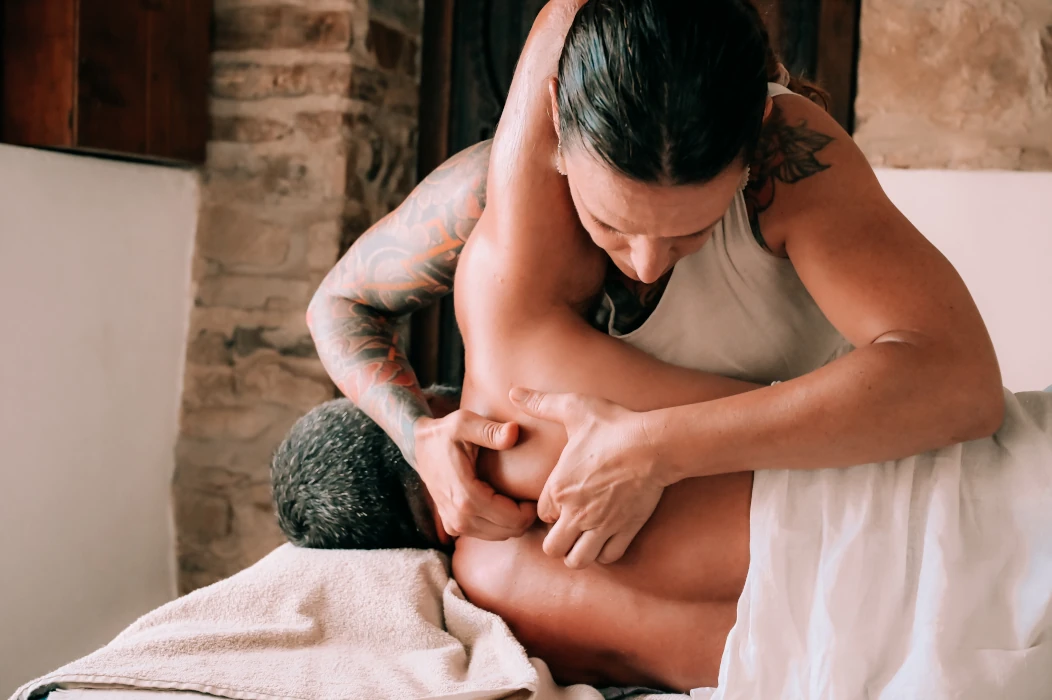
Deep Tissue Massage in Tarifa
Personalised deep tissue treatment for persistent tension, stiffness and restricted movement
Deep Tissue Massage is a focused Posterior Fascia treatment for people who need more than a conventional relaxation massage. It is designed for persistent muscular tension, stiffness, overloaded areas and movement that feels restricted or uncomfortable.
Rather than applying strong pressure only where discomfort is felt, Arianna looks at how different areas of the body move and work together. The treatment may follow connected areas through the back, shoulders, pelvis, gluteal muscles and legs, depending on your individual needs.
Slow, progressive pressure is combined with myofascial techniques, trigger point work, assisted mobility and optional hot or cold applications. Every session is completely personalised and can be both deeply therapeutic and deeply relaxing.
Deep Tissue Massage
at a glance
- Duration: 70 minutes
- Price: €80
- Focus: Posterior fascia
- Treatment areas: Posterior Fascia focussed
- Techniques: Deep tissue massage, dry myofascial assessment, trigger point pressure, mobility techniques and optional hot or cold therapy
- Best for: Persistent muscular tension, stiffness, physical overload and restricted movement
- Location: Tarifa Old Town
- Appointments: By appointment only
- Pressure: Progressive and fully adapted to your comfort
Who is this Deep Tissue Massage for?
This treatment is suitable for people who experience recurring muscular tension, stiffness or areas that remain difficult to relax.
It can be adapted for tension around the lower back, upper back, neck, shoulders, arms, pelvis, gluteal muscles and legs.
This treatment does not diagnose or treat injuries or medical conditions. Persistent, severe or worsening pain should be assessed by an appropriate healthcare professional.
It may be especially helpful for:
- surfers, kitesurfers, wingfoilers and other athletes;
- people with physically demanding work;
- office workers and people who sit for long periods;
- professional drivers and frequent travellers;
- people dealing with repetitive strain or overuse;
- people experiencing tension through several connected areas;
- anyone who wants deeper, personalised bodywork without unnecessarily painful pressure.
Why Deep Tissue Massage looks beyond the painful area
The place where discomfort is felt is not always the only area under strain.
Deep Tissue Massage looks at how nearby muscles and movement patterns may influence one another. For example, lower-back tension may be accompanied by tightness around the hips, gluteal muscles or hamstrings. Neck discomfort may be connected with tension through the upper back, shoulder blades or arms.
That does not mean every problem has one hidden cause. It means the session can be adapted more intelligently than simply pressing on the place that hurts.
A dry myofascial assessment before the massage
The treatment begins with a short dry assessment before massage oil is applied.
Direct contact with the skin allows Arianna to feel how the superficial tissues move and identify areas that appear especially tight, sensitive or less mobile. This helps determine where the treatment should begin and which techniques may be most appropriate.
Oil is introduced later where it supports smoother massage strokes and deeper manual work. This combination allows the session to move gradually from assessment and preparation into more focused treatment.
Deep tissue massage
Slow, controlled pressure is applied progressively through the muscular layers rather than being forced into the body.
Deep tissue massage does not mean using the maximum possible pressure. Working too aggressively can cause discomfort and make the muscles tighten defensively. Arianna instead allows the superficial tissues time to relax before moving into deeper areas.
This gradual approach makes it possible to work accurately around persistent muscular tension while adapting every technique to your comfort and response.
Research reviewing massage for people with painful conditions suggests that massage may support improvements in function, although treatment outcomes differ according to the individual and condition.
Myofascial and trigger point techniques
Myofascial techniques use slow, sustained contact around areas that feel tight or less mobile. Trigger point pressure focuses on sensitive muscular points that may produce local or referred discomfort.
These techniques may be used through the neck, back, shoulders, pelvis, gluteal muscles or legs according to what Arianna finds during the session.
A systematic review and meta-analysis found that manual therapy interventions may support improved range of motion in people with myofascial trigger points.
The treatment remains individual: not every area requires deep pressure, and not every technique is appropriate for every client.
Hot and cold therapy
When suitable, hot or cold applications may be added to the massage.
Warm basalt stones
Warm basalt stones may be used to make tight muscles feel more comfortable and help prepare the area for manual work. The warmth can be especially pleasant in areas that feel chronically tense or difficult to relax.
The stones are used as a complement to the massage, not as a separate hot-stone routine.
Ice therapy
When appropriate, targeted ice therapy may be used alongside the massage, particularly when an area feels sensitive, irritated or overloaded after intense physical activity.
The cooling effect may provide temporary pain relief and help manage swelling in acute soft-tissue complaints. Ice therapy is applied briefly and selectively around sensitive or overloaded areas, with the intensity adapted to your comfort and skin sensitivity.
Deep treatment without unnecessary pain
One of the biggest misconceptions about deep tissue massage is that it must hurt to be effective.
At Tarifa Sports Massage, deep treatment is based on precision, patience and gradual pressure. Arianna works progressively, allowing the body time to respond instead of forcing pressure into resistant tissue.
This can help keep the session comfortable while still providing concentrated attention to areas of persistent tension.
You remain in control throughout the massage. Pressure can be adjusted at any moment, and a deeper technique is only used when it suits your body and treatment goals.
Therapeutic and deeply relaxing
Although this is an intensive treatment, it can also create a profound feeling of calm.
Slow manual work, steady pressure and a comfortable treatment environment may help the body settle during the session.
Research reviews suggest that manual therapies may influence measures associated with both sympathetic and parasympathetic nervous-system activity, although individual responses and study findings vary.
Many clients therefore experience the treatment as both focused and relaxing rather than aggressive or purely clinical.
The aim is for you to leave feeling lighter, calmer and more comfortable in your movement.
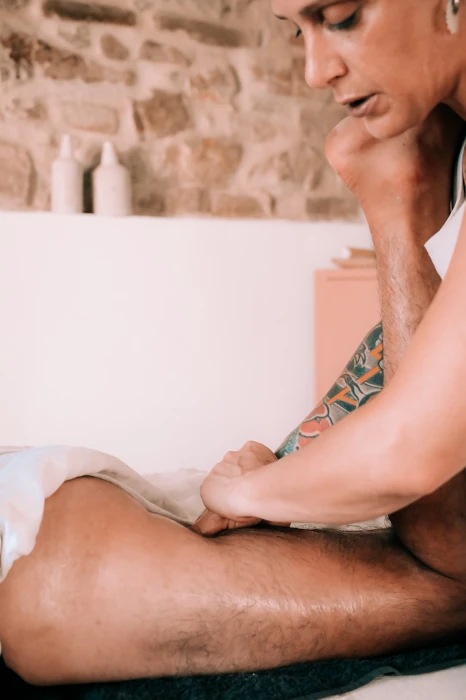
How Arianna works during a Deep Tissue Massage
Arianna does not begin by applying deep pressure immediately. The session starts with observation, touch and a dry assessment of the areas that feel restricted, overloaded or less mobile.
She then works progressively through the different tissue layers, allowing the body time to respond before moving deeper. This makes the treatment more precise and helps avoid unnecessary discomfort or defensive tension.
Rather than following a fixed full-body routine, Arianna decides during the session which areas need the most attention. A problem around the lower back, for example, may also require work around the pelvis, gluteal muscles, hamstrings or thoracic spine. Neck and shoulder tension may involve the shoulder blades, upper back or arms.
This treatment is therefore built around the individual pattern of tension, not around a standard sequence.
Why choose the Deep Tissue Massage?
Deep Tissue Massage is different from a general relaxation massage because it is built around persistent tension, movement restrictions and the way different areas of the body influence one another.
The aim is not simply to press harder on one painful area. The treatment develops gradually, allowing superficial tension to release before deeper structures are approached.
It is a strong choice when you want:
- progressive work through deeper muscular layers;
- attention to long-standing or recurring tension;
- treatment that may include several connected areas of the body;
- a dry myofascial assessment before oil is applied;
- precise pressure instead of forceful or painful techniques;
- a personalised combination of deep tissue, trigger point, mobility and myofascial work;
- optional hot or cold applications when they suit the treatment;
- support for recovery, maintenance and more comfortable movement.
Every Deep Tissue Massage is adapted to your movement pattern, activity, pressure tolerance and the areas that need the most attention on the day.
What may feel different after this treatment?
Because Deep Tissue Massage works progressively through areas of persistent tension, the response may feel different from a general relaxation massage.
The aim is not to force an immediate dramatic change, but to create more comfort, mobility and ease through careful, targeted work.
After the session, you may notice:
- less heaviness or tightness in overloaded muscles;
- easier movement in areas that previously felt restricted;
- temporary tenderness in places that received deeper work;
- a calmer, more settled feeling after intensive manual treatment;
- greater awareness of which movements or habits contribute to tension.
How to prepare for a Deep Tissue Massage
Before the session, think about where you feel tension, when it appears and which movements or activities make it worse.
It is useful to tell Arianna:
- how long the tension has been present;
- the sport, work or daily activity that may be contributing;
- your preferred pressure level;
- any intensive training earlier that day;
- upcoming competitions or important sessions;
- areas that feel unusually sensitive.
Avoid a heavy meal immediately before the appointment and wear comfortable clothing.
Aftercare after Deep Tissue Massage
Deeper manual work can leave some areas temporarily sensitive, especially when long-standing tension has been treated.
After the session:
- keep the body moving gently;
- avoid unusually intense training if the treated areas feel tender;
- allow time for the body to settle;
- avoid pressing, foam rolling or aggressively stretching the same areas immediately afterwards;
- drink normally;
- pay attention to how movement feels over the next 24 hours.
Mild tenderness can occur. Severe, unusual or worsening symptoms should be assessed by a qualified healthcare professional.
Book your Deep Tissue Massage in Tarifa
Choose a personalised treatment that combines precise deep tissue work with progressive pressure, manual assessment and genuine understanding of active bodies.
Book your appointment in Tarifa Old Town or send Arianna a WhatsApp message with the area of tension, how long it has been present, your sport or activity, and your preferred pressure level.
Deep Tissue Massage in Tarifa FAQ
Is Deep Tissue Massage painful?
It can feel intensive, but it should not feel unnecessarily painful. Pressure is applied gradually and adjusted throughout the session according to your comfort and response.
Is the treatment full body?
It is a personalised Posterior Fascia treatment, so not every area receives equal time. The session focuses primarily on the areas and connected regions most relevant to your tension and movement.
Which areas can be included?
Depending on your needs, treatment may include the neck, shoulders, back, arms, pelvis, gluteal muscles and legs.
Is this massage only for athletes?
No. It is also suitable for office workers, drivers, travellers and people with physical work, repetitive movements or prolonged sitting.
Is it suitable before or after sport?
Yes. The massage can be adapted for preparation, recovery or regular body maintenance. Tell Arianna when your next training session or event will take place.
Are hot and cold techniques always included?
No. They are optional and used only when appropriate for your body, treatment goals and personal preference.
Can Deep Tissue Massage treat sciatica or frozen shoulder?
Massage cannot diagnose or cure these conditions. It may support comfort and movement in suitable cases, but diagnosed injuries, neurological symptoms or persistent pain should also be assessed by a qualified healthcare professional.
What should I wear?
Wear comfortable clothing to the appointment. During treatment, only the area being worked on is uncovered, using professional draping.
How often should I book?
This depends on your activity level, tension, goals and response. It may be booked after intensive activity, occasionally when tension builds up or as part of a regular maintenance routine.